01 / SURFACE PASS
Embedded Procedural Texture
Terrain breakup, crop rows, road grain, timber, roofing, solar cells, city-window grids, water ripples, hill variation, and dome imperfections were added directly to the Blender materials.

An early procedural Blender blockout of a bright solarpunk countryside viewed from a moving transit cabin. It proves layout, camera motion, and editability, but reaches only about 20% of the reference’s required photoreal finish and is not acceptable as final delivery.
The lateral camera path preserves the source shot’s layered parallax: window mullions and foreground trees cross quickly while fields, biodomes, water, hills, aircraft, and the distant city move at progressively slower depths.
Four points along the same 308-frame camera move. Every object remains available in Blender by purpose: terrain, fields, water, vegetation, architecture, domes, city, skycraft, vehicle foreground, and lights.
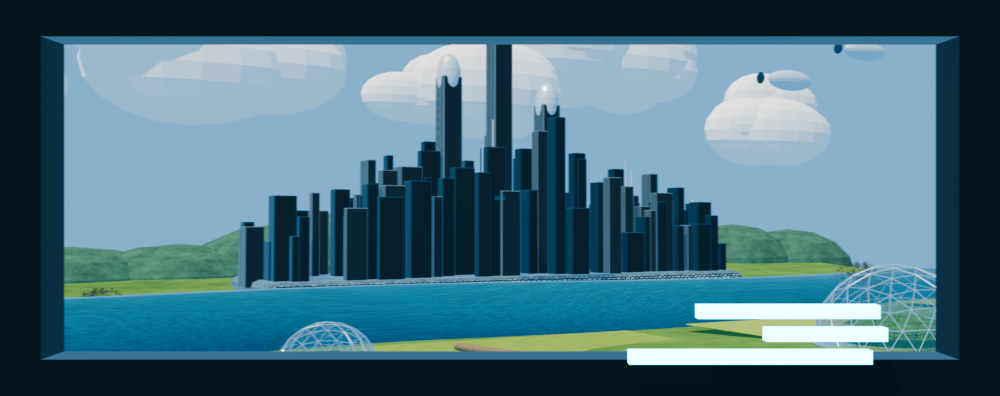
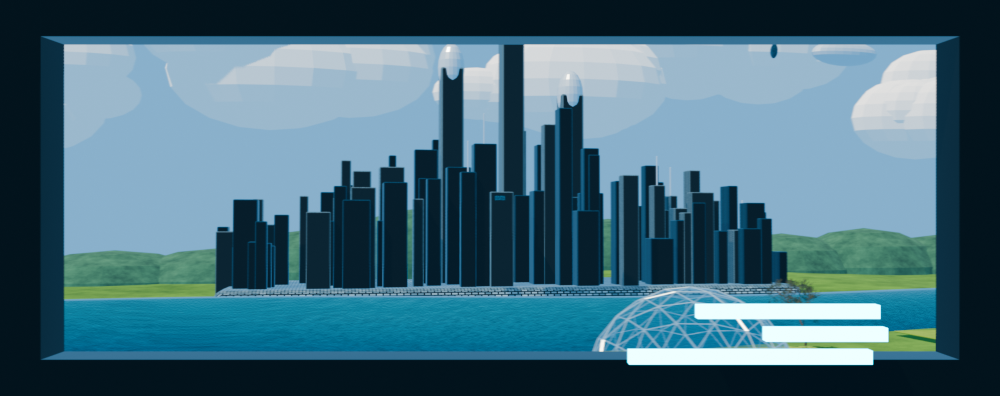
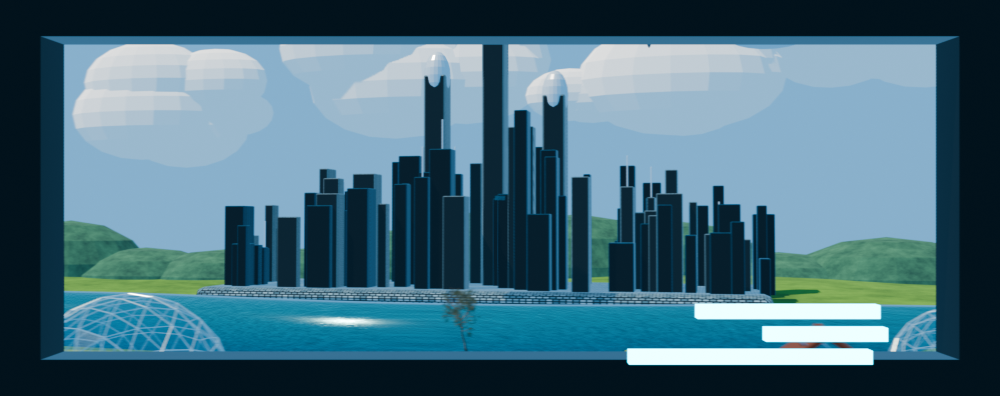
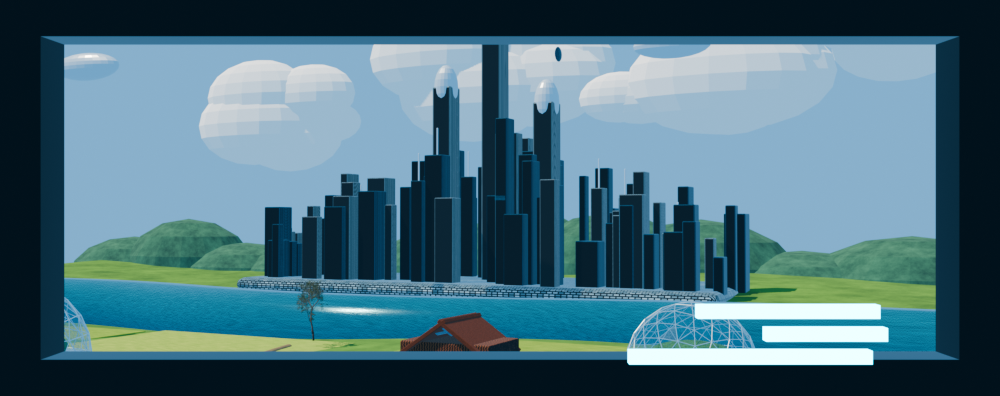
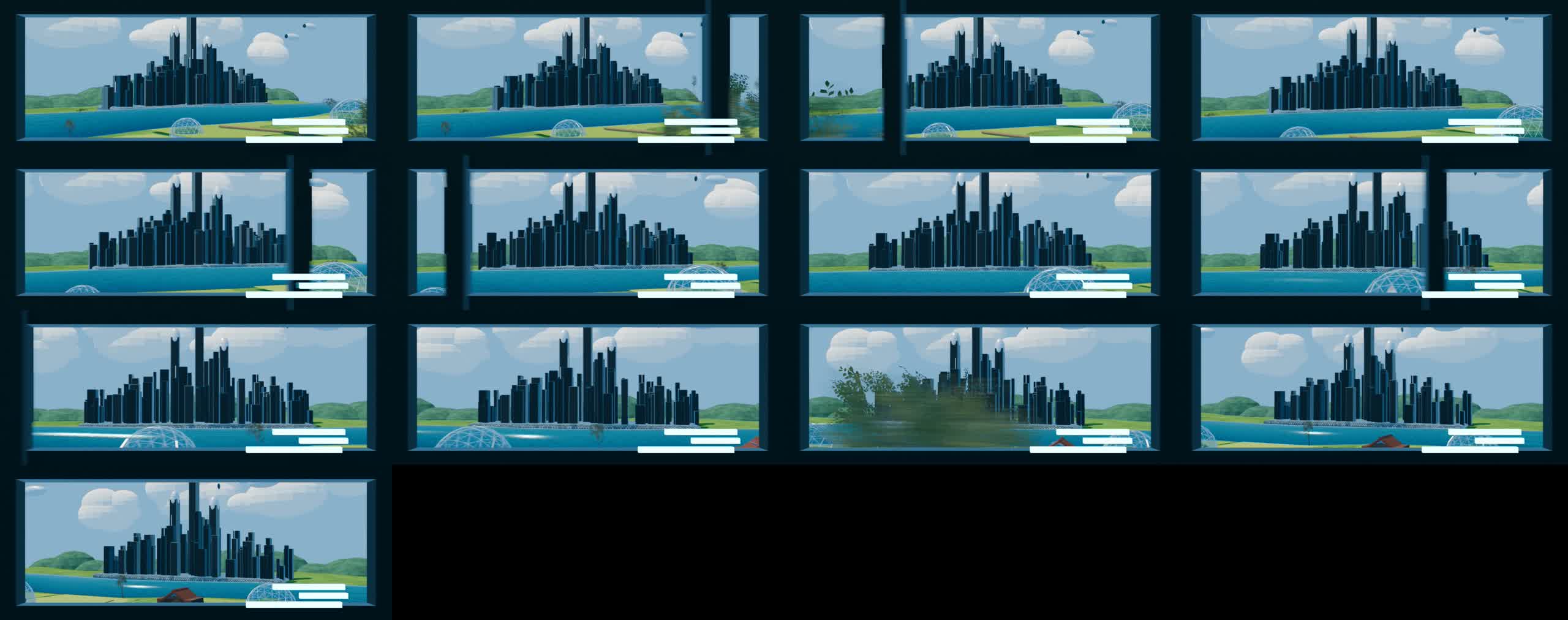
The first render proved the composition but exposed two material failures: surfaces read as flat colors, and placeholder sphere trees broke the natural look. The scene was revised rather than regenerated.
Terrain breakup, crop rows, road grain, timber, roofing, solar cells, city-window grids, water ripples, hill variation, and dome imperfections were added directly to the Blender materials.
Every placeholder sphere tree was removed. The revision uses instanced Poly Haven broadleaf geometry with packed CC0 bark, leaf-alpha, normal, and roughness maps.
Proof frames were reviewed for clipping, broken alpha, missing maps, scale errors, parallax continuity, and surface readability before the complete animation was rendered again.
This reconstruction responds to the visual language of the shared clip while keeping attribution explicit.
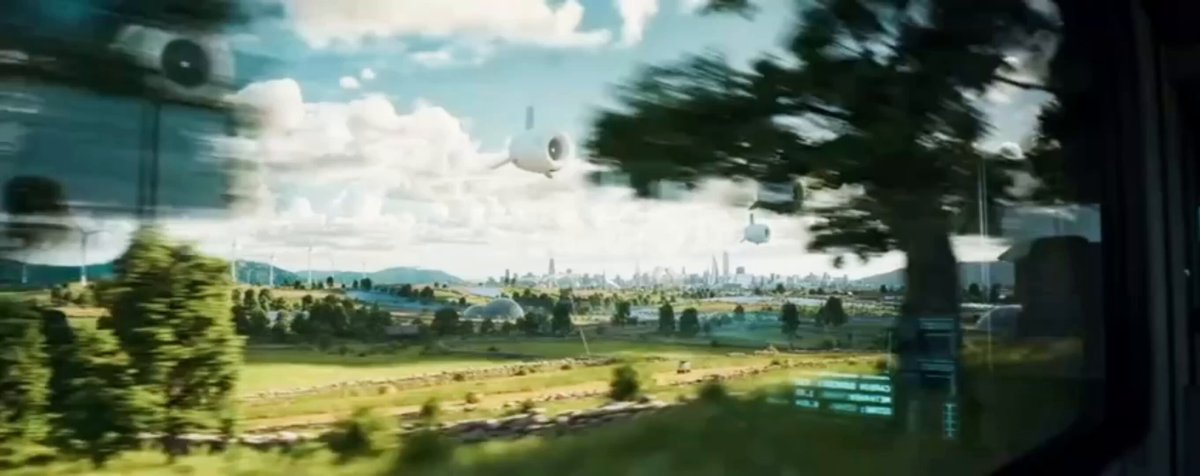
The shared source clip was not generated by Kimi K3. Replies to the post identify it as human-made work by 3D generalist Dylan Donaldson (@Zertox3D), built with Blender and other tools and rendered with Karma in Houdini.
This page documents a separate procedural approximation made through the same practical loop described in the article: build an editable first version, inspect the result, modify the underlying scene, and render again.